I asked five analysts to price Apple's foldable for India. One of them was ready for ₹3 lakh.
The rest of us anchored on what felt defensible. Apple charged what it felt like charging. Here is the gap, and what actually fills it.
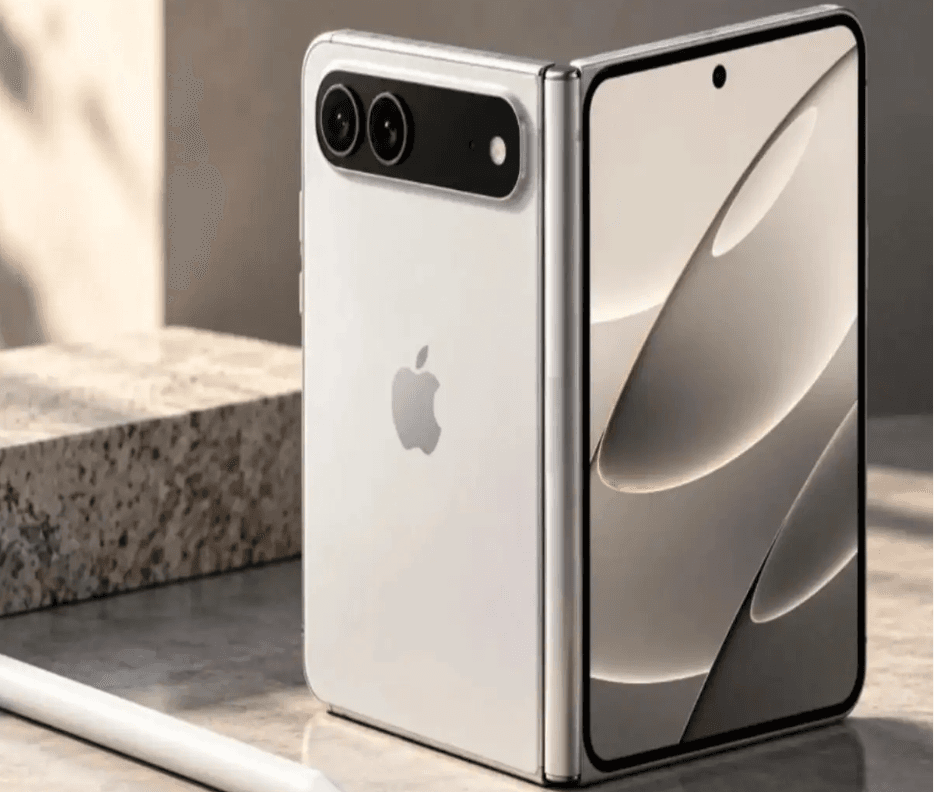
₹2,99,900. Read it twice. It's not a typo, and it isn't the 2TB variant. That is the entry ticket to Apple's first folding phone in India, and I have been staring at it since last night with the specific discomfort of someone who spent a week telling readers it would be cheaper.
The exercise was simple. In the days before the keynote I called people who price phones for a living and asked them to guess what Apple would charge here. Four of them gave me numbers. Three of those four landed in a tight, sensible band between ₹2.2 lakh and ₹2.5 lakh. Reasonable people, reasonable methods, converging on a reasonable answer.
Reasonable turned out to be the wrong instinct.
What the room thought
| Abhilash Kumar Smart Analytics Global |
₹2.2 lakh or more |
| Tarun Pathak Counterpoint Research |
₹2.2–2.5 lakh |
| Mohammad Faisal Techarc |
₹2.3–2.5 lakh |
| Navkendar Singh IDC |
₹2.4–3 lakh |
Four different models, one shared band around ₹2.4 to ₹2.5 lakh. When four analysts using four methods cluster like that, you tend to believe them. I did. I wrote the number down and moved on.
Navkendar was the outlier, and the outlier was the one who got there. His ceiling is the answer, to within a hundred rupees. Abhilash hedged with an open top end and technically stayed inside the lines. Everyone else, me included, put a roof on a market that doesn't have one.
The gap I got badly wrong
My working assumption going in was a gap of around ₹60,000 between the American price and the Indian one. Import duty, currency, memory costs. Three forces, one tidy number, filed by deadline.
The real gap is closer to ₹1.2 lakh.
At the rate as I write this, $1,999 converts to somewhere near ₹1.75–1.8 lakh. Apple is asking ₹2,99,900. Even after you allow for the fact that American prices are quoted before sales tax, that is a premium of roughly seventy per cent for the privilege of buying the same object in your own country.
The three forces are still the right three. I simply underestimated every one of them.
Import duty. The first batch of any new form factor ships in fully built. There is no local line in Tamil Nadu or Karnataka assembling a folding OLED panel and a titanium hinge on day one. That is the most expensive way for a phone to enter this country, and it is the part that eventually goes away.
The rupee. Down roughly seven per cent against the dollar in a year. Every point of that lands on the shelf price, and it compounds against a device that was already the most expensive iPhone ever built.
Memory. This is the one almost nobody outside the supply chain is discussing, and it may be the one that matters most. AI data centres are buying memory at a scale that has repriced the whole market. A phone shipping with 12GB of RAM and a 256GB floor is now bidding against server racks that genuinely do not care what they pay. The Duo starts at 256GB because a cheaper version stopped being possible to build.
The prediction I was happiest to lose
Every analyst I spoke to assumed India would wait. Navkendar was the only one willing to name a month, and he said late October or November, behind China, the United States and Western Europe. Nobody on the panel disagreed. They just didn't want to be quoted saying so.
We were all wrong, and I am glad about it.
India is in the first wave. Pre-orders open on 16 October, the same Friday as everywhere else, at 5.30pm IST. Devices in hand on 23 October alongside the US, the UK, China, Japan, Germany and around seventy other markets. A second group of twenty-eight countries follows a week after that. India is not in the second group.
I want to sit with that for a moment, because it is the only genuinely warm thing in a story otherwise about a very expensive phone. For most of the iPhone's life in this country, being an Indian buyer meant being an afterthought. You stayed up for a 10.30pm keynote, you got excited, and then you waited a month while the phone went on sale in places that mattered more. The iPhone 6 landed here in October when the rest of the world had it in September, and we called that progress because the gap had shrunk.
Six stores. Twenty-five-plus supplier sites. And now day-one availability for the most complicated product the company has ever built. Somebody inside Apple argued for that. It did not happen by itself.
What the confusion over the 18 Pro tells you
The detail that actually stopped me during the reporting had nothing to do with the foldable. I asked the same panel what would happen to iPhone 18 Pro pricing in India, and the answers ran from a 3.8 per cent increase to a 20 per cent increase.
That is a fivefold spread, on a product line everyone has covered for a decade, in the same week.
The disagreement was never about duty rates or exchange rates. Those are public. It was about one unknowable variable: how much of the cost increase Apple swallows before passing it on. Half the panel thought Apple would absorb most of it to defend volume. The other half thought Apple had quietly stopped caring about volume at the top of the range.
Look at ₹2,99,900 and tell me which half was reading the company correctly.
| Storage | Price |
|---|---|
| 256GB | ₹2,99,900 |
| 512GB | ₹3,24,900 |
| 1TB | ₹3,74,900 |
| 2TB | ₹4,49,900 |
Ternus's first number
Prabhu Ram of CyberMedia Research framed the stakes better than anyone else I spoke to. This is John Ternus's first major product moment as chief executive. He took the job on 1 September. Eight days later he walked on stage and introduced the biggest change to the iPhone in nearly twenty years.
Every chief executive's first launch gets read as a thesis statement. Cook's was continuity. Ternus's, at least on the India question, reads as two decisions that don't obviously agree with each other.
Ship it here on day one, and India is a market. Price it at three lakh, and India is a market of a few thousand people.
Both can be true. I think both are true, and that is the honest answer to what Apple is doing here. The Duo is not built to sell in volume in India. It is built so that the 18 Pro at ₹1.45 lakh reads as the sensible choice, so the ecosystem gets its halo, so that the man unfolding a passport-sized screen in an airport lounge becomes a category of person that exists in this country. Apple has been running this play in India for years. It simply never had a product expensive enough to run it properly.
My read going in was that Apple prices India as a halo market and serves it late. I am revising half of that. Apple prices India as a halo market and, finally, serves it on time.
Three lakh rupees. A folding screen, an A20 Pro, two 48-megapixel cameras, and a device that costs more than most laptops and about as much as a decent second-hand car.
So does a phone at this price move any real volume here? Or does it exist purely to make the ₹1.45 lakh Pro look like restraint?
I know which way I lean. I would rather hear which way you do.